
Understanding the Software Development Life Cycle (SDLC)
The Software Development Life Cycle (SDLC) is a structured process used by software developers and engineers to design, develop, and test software applications.

What is the SDLC
At its core, SDLC is a methodology for creating software. It provides a framework for a systematic and organized approach to building software, ensuring that each stage of the process is well-planned and executed. While there are different models of the SDLC, such as Waterfall, Agile, Spiral, and DevOps, all of them follow a similar set of phases that guide the project from idea to reality. Let’s continue reading to see how all these phases are essential.
Why Use the SDLC?
One might wonder why developers bother following a cycle like this. Why not just jump into writing code and adjust along the way? Here’s why the SDLC is essential:
Structure and Organization: It provides a clear roadmap, so the team knows exactly what to do and when to do it.
Reduced Risk: By breaking the project into phases, potential problems can be identified early, reducing the risk of costly mistakes later on.
Improved Quality: The SDLC emphasizes thorough planning, design, and testing, which improves the overall quality of the final product.
Better Resource Management: Teams can allocate time, budget, and personnel more effectively by knowing exactly what's coming next in the process.
Now, let’s take a closer look at the stages of the SDLC.
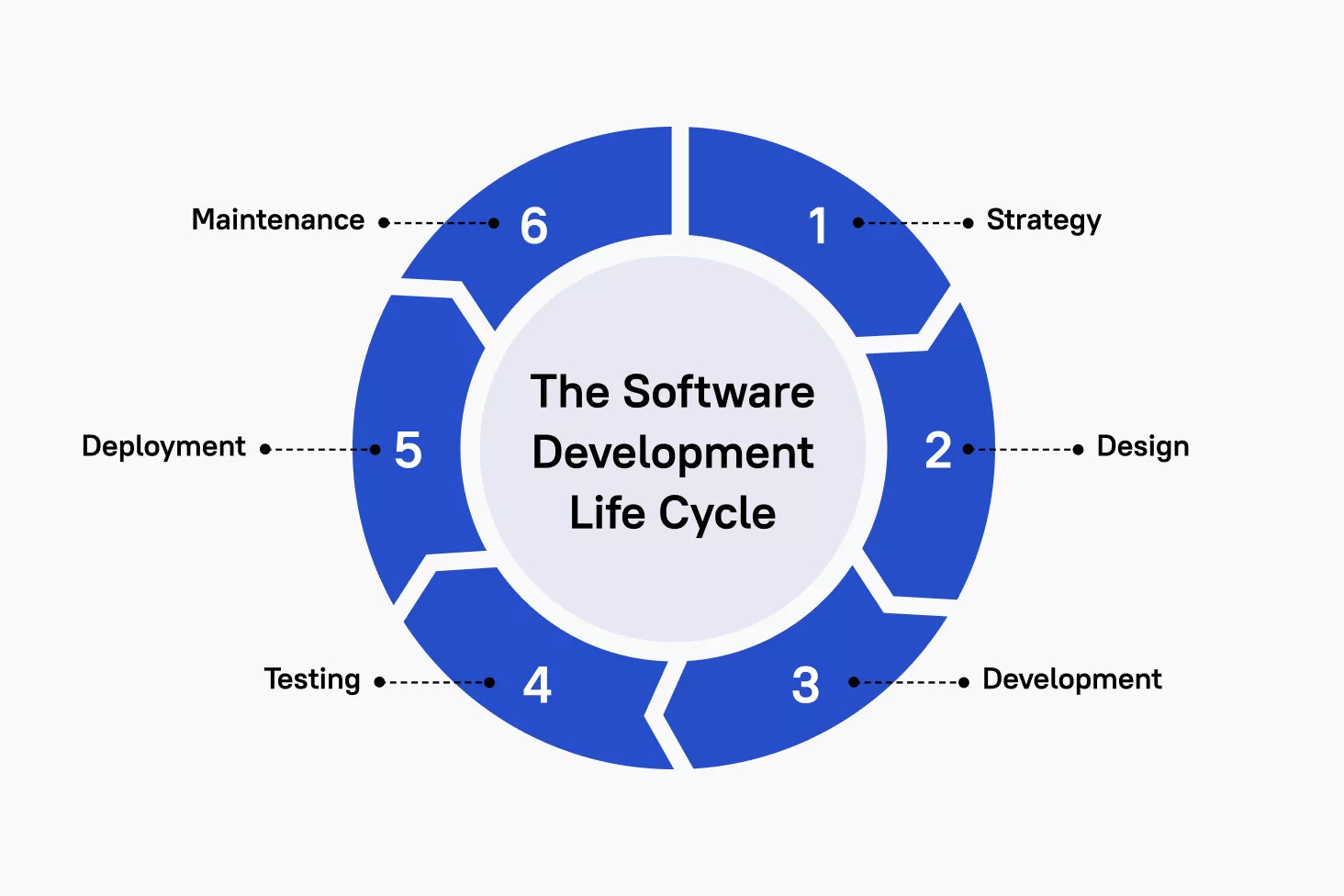
The Phases of the Software Development Life Cycle
Strategy & Requirements Gathering
In the initial phases of a project, teams first create a plan, discussing the project's scope, objectives, and feasibility, while assessing resources, timelines, and risks to prevent delays. Once the plan is set, they define the software’s requirements by gathering input from stakeholders, customers, and users, ensuring that the development aligns with the project’s goals and technical needs.
Design
With a clear understanding of the requirements, the design phase focuses on creating a blueprint for the software. Architects and developers lay out the system architecture, database designs, and user interface. The goal is to create a detailed design that addresses the technical and operational aspects of the system. The more thorough the design, the smoother the development phase will be.
Development
This is where the magic happens. In the development phase, developers write the actual code based on the design specifications. They build the backend systems, frontend user interfaces, and any necessary integrations. This phase requires collaboration between different teams, including frontend, backend, database engineers, and quality assurance testers. Depending on the SDLC model (e.g., Agile or Waterfall), development may happen incrementally or in one large chunk.
Testing
Testing is all about ensuring that the software works as intended. Quality assurance teams conduct various types of tests, such as unit testing, integration testing, and user acceptance testing, to identify and fix any bugs or issues. In this phase, testers simulate real-world usage to ensure the software meets the required standards for functionality, performance, and security. Testing is essential to catch issues before they reach the end-user.
Deployment
Once the software passes testing, it's time to launch it. The deployment phase involves releasing the software to a production environment, where users can start interacting with it. Depending on the complexity of the project, deployment can be done all at once or in stages. During this phase, developers may also need to provide training or documentation to ensure users can effectively use the new system.
Maintenance
The work isn’t done once the software is deployed. The maintenance phase involves ongoing support and updates to fix bugs, add new features, or adapt to changing user needs. This phase is continuous, as software often evolves over time to stay relevant, secure, and functional. Maintenance is a critical phase because it ensures the software remains useful and bug-free in the long run.
SDLC Models: Which One to Choose?
Different projects require different approaches, which is why there are various SDLC models to choose from. Here are some of the most common ones:
Waterfall: A linear approach where each phase must be completed before moving on to the next. It’s best for projects with clearly defined requirements.
Agile: An iterative model where development happens in small, incremental cycles called sprints. It’s ideal for projects that require flexibility and frequent updates.
Spiral: Combines elements of both Waterfall and Agile, adding a focus on risk assessment and iterative progress.
DevOps: Focuses on continuous integration and deployment, where development and operations teams collaborate closely throughout the process. This model emphasizes automation and efficiency.
Conclusion
The Software Development Life Cycle is more than just a technical framework—it's the foundation of successful software projects. Whether you're working on a small app or a large enterprise solution, following a structured approach like the SDLC can lead to better organization, clearer communication, and higher-quality software.
By breaking the process into manageable stages and choosing the right SDLC model for your project, you can ensure that your software not only meets user expectations but also stays on budget and schedule. In the world of software development, a solid SDLC is your roadmap to success.
Did you enjoy reading this?? you can support by subscribing to my newsletter.